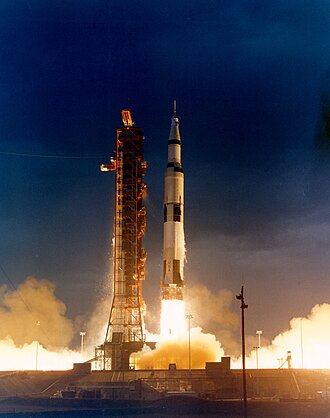
When Apollo 14 launched on January 31, 1971, NASA was determined to prove that lunar exploration could continue safely and successfully after the aborted Apollo 13 mission. What followed was a mission defined by precision, resilience, and one of the most iconic moments in lunar history.
The Crew That Carried Apollo Forward
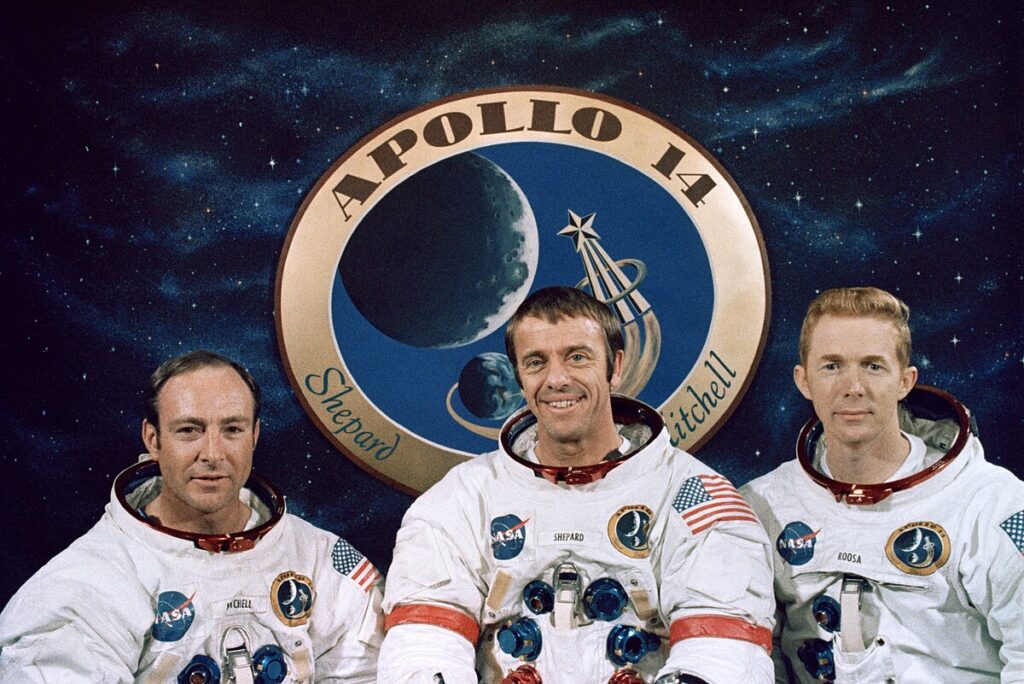
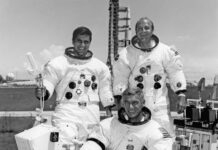
Apollo 14 was commanded by Alan B. Shepard Jr., America’s first astronaut in space. Joining him were:
- Edgar D. Mitchell — Lunar Module Pilot
- Stuart A. Roosa — Command Module Pilot
Together, they formed a highly experienced crew ready to restore confidence in NASA’s lunar operations.
A Scientific Mission to the Fra Mauro Highlands
Apollo 14 targeted the Fra Mauro highlands, a region originally assigned to Apollo 13. This scientifically rich area contained ejecta from the massive Imbrium impact event — material that could reveal the Moon’s deeper history.
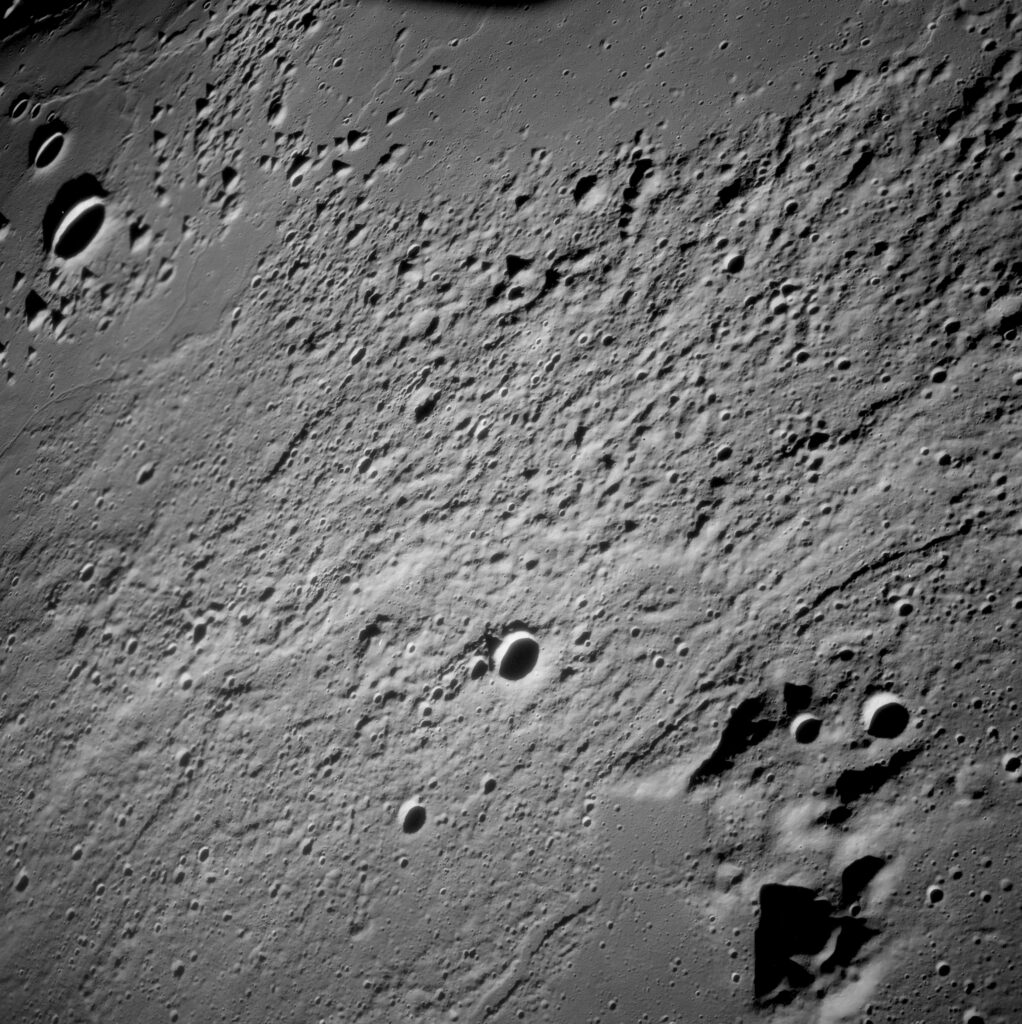
The terrain was rugged and challenging, making precision landing essential.
Landing and First Steps on the Moon
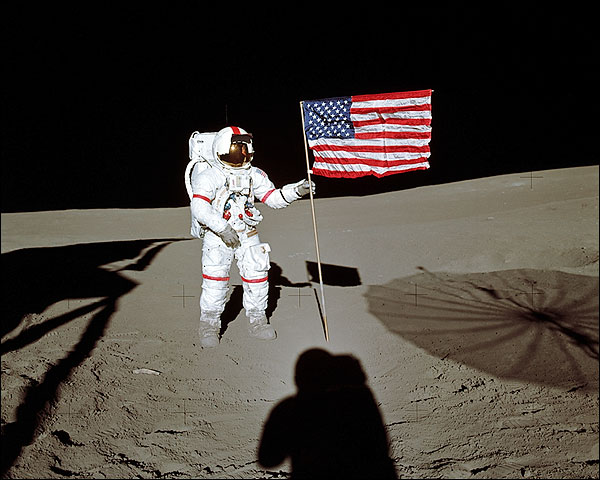
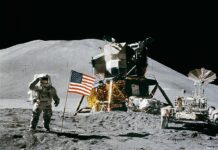
On February 5, 1971, Shepard and Mitchell landed in the Lunar Module Antares. Shortly after touchdown, Shepard stepped onto the Moon for the first time, becoming the fifth human to walk on its surface.
His early moments beside the U.S. flag symbolized not just national pride, but a renewed confidence in lunar exploration.
Exploration, Experiments, and Science on the Surface
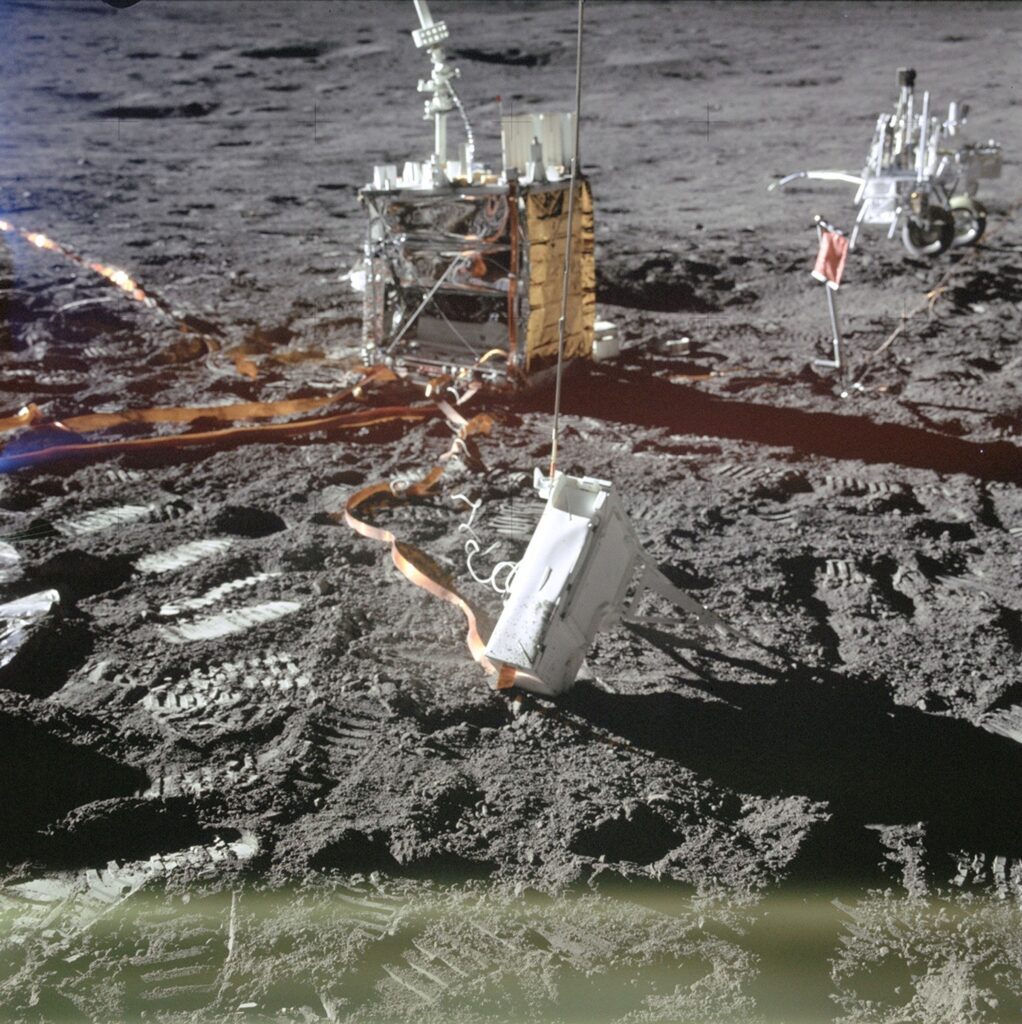
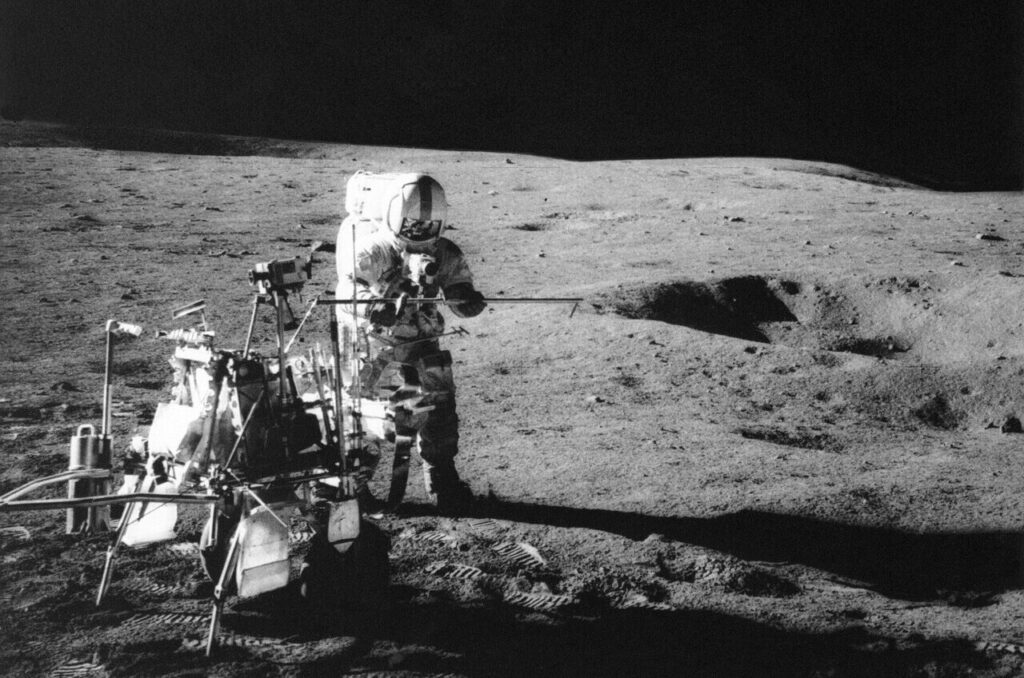
Apollo 14’s two moonwalks included:
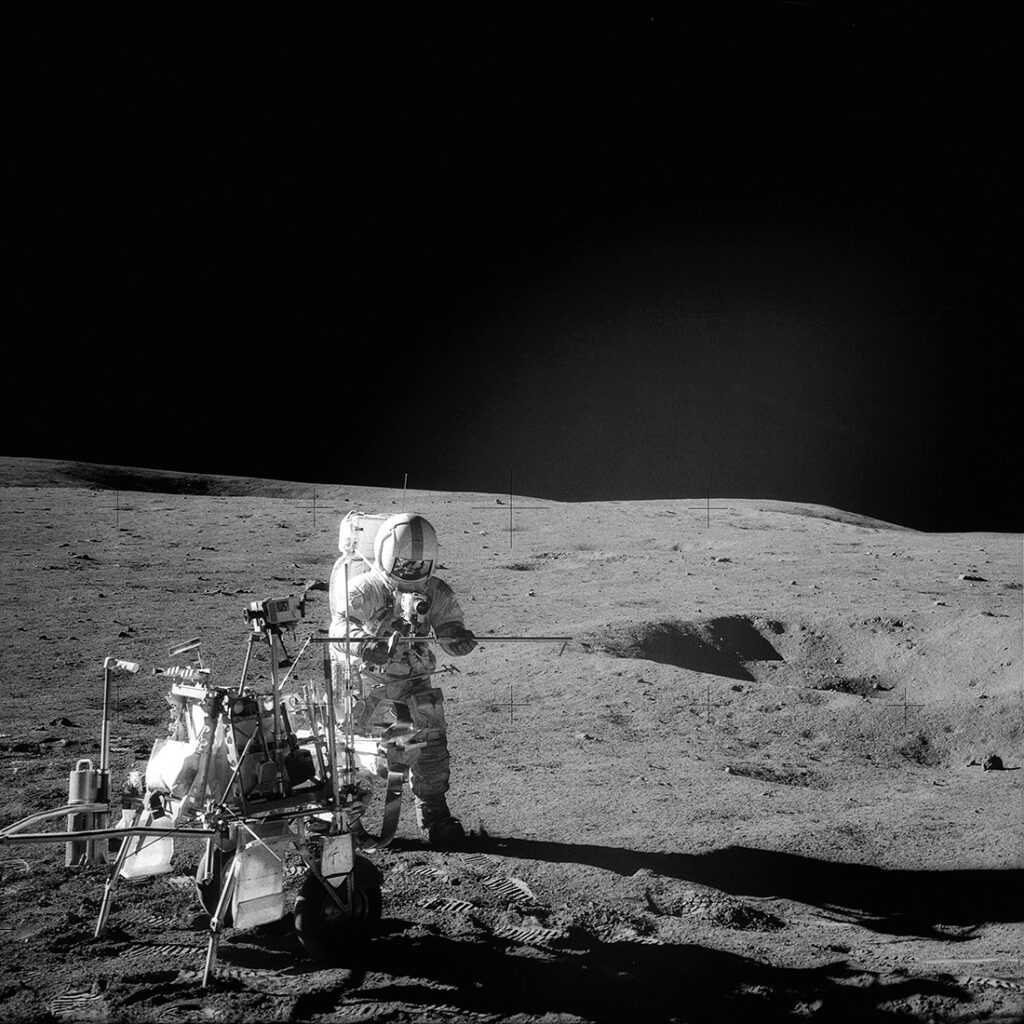
- Deployment of the ALSEP scientific instrument package
- Sampling the Fra Mauro geological formations
- A challenging uphill trek toward Cone Crater
- Core drilling to collect ancient subsurface samples
Though the climb toward Cone Crater didn’t reach the rim, the samples collected were still among the most valuable of the Apollo program.
Alan Shepard’s Famous Golf Shot
One of the most unforgettable moments in space history happened on Apollo 14.
Using a makeshift six-iron head attached to a lunar scoop handle, Alan Shepard hit two golf balls across the lunar surface.
His words — “Miles and miles and miles!” — became legendary, capturing the human spirit in an otherworldly setting.
Stuart Roosa’s Science From Orbit
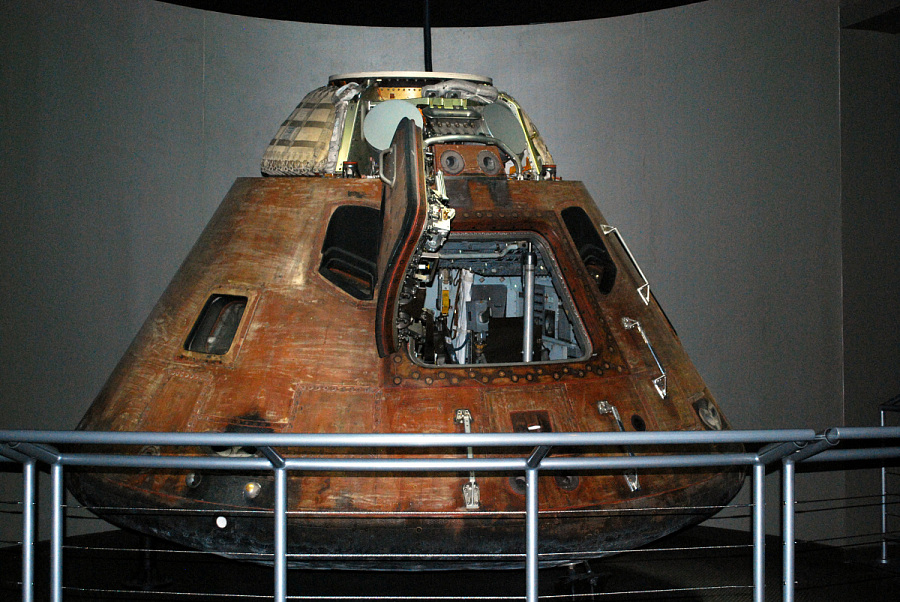
While Shepard and Mitchell explored the surface, Stu Roosa orbited above in the Command Module Kitty Hawk.
He conducted experiments, photographed the lunar surface, and carried hundreds of tree seeds — later known as Moon Trees — which would be planted across Earth after the mission.
Return to Earth
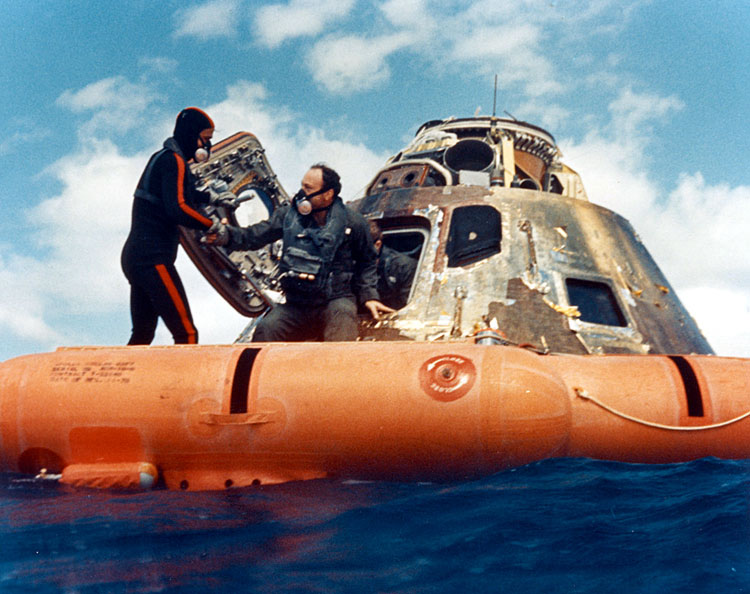
Apollo 14 splashed down safely in the Pacific Ocean on February 9, 1971. The successful mission restored momentum to the Apollo program and proved that deep-space operations could continue with confidence.
The Legacy of Apollo 14
Apollo 14 stands as a mission of resilience and mastery:
- The first successful lunar landing after Apollo 13
- The return of America’s first astronaut to the lunar surface
- Critical geological sampling from the Fra Mauro formation
- Deployment of long-lasting scientific equipment
- One of the most iconic human moments in space: the lunar golf shot
Apollo 14 demonstrated that exploration is not just about reaching a destination — but about learning, adapting and pushing the boundaries of what is possible.